How to Resurface a Concrete Driveway
A concrete driveway is designed to be durable, but over time it can start to show signs of wear. Cracks, surface flaking, stains and fading are common issues caused by regular vehicle traffic, weather exposure and general ageing.
If your driveway is structurally sound but looking tired, driveway resurfacing can be a practical and cost-effective solution. Rather than removing and replacing the entire slab, resurfacing restores the surface, improves appearance and extends the life of the driveway.
In this guide, we explain how to resurface a concrete driveway, when resurfacing is the right option, and how much it typically costs in Australia.
What Is Concrete Driveway Resurfacing?
Concrete driveway resurfacing involves applying a new cement-based or polymer-modified coating over the existing concrete surface. This creates a fresh, uniform finish while covering minor imperfections such as small cracks, surface wear and discolouration.
Resurfacing does not involve removing the existing slab. Instead, it rejuvenates the surface, making it ideal for driveways that are still structurally stable but cosmetically worn.
Common resurfacing finishes include plain resurfacing, coloured concrete, exposed aggregate, stencilled or patterned finishes, and decorative concrete overlays.
When Should You Resurface a Concrete Driveway?
Resurfacing is suitable when the underlying concrete is still in good condition.
Driveway resurfacing is suitable if:
- The driveway has hairline or minor cracks
- There is surface flaking or scaling
- The concrete is stained or discoloured
- The surface looks worn, patchy or uneven
Resurfacing may not be suitable if:
- There are large structural cracks
- The slab has sunk or shifted significantly
- There are major drainage or base issues
- The concrete is severely damaged or crumbling
In these cases, repairs or full replacement may be required before resurfacing can be considered.
How to Resurface a Concrete Driveway
Concrete driveway resurfacing is a multi-step process. Proper preparation is critical to ensure the new surface bonds correctly and lasts long-term.
Step 1: Inspect the driveway
The first step is assessing the condition of the existing concrete. This helps determine whether resurfacing is suitable and what preparation or repairs are required.
During inspection, the contractor checks for structural cracks, surface damage, drainage issues and any existing coatings or sealers.
Step 2: Thoroughly clean the surface
The driveway must be completely clean before resurfacing.
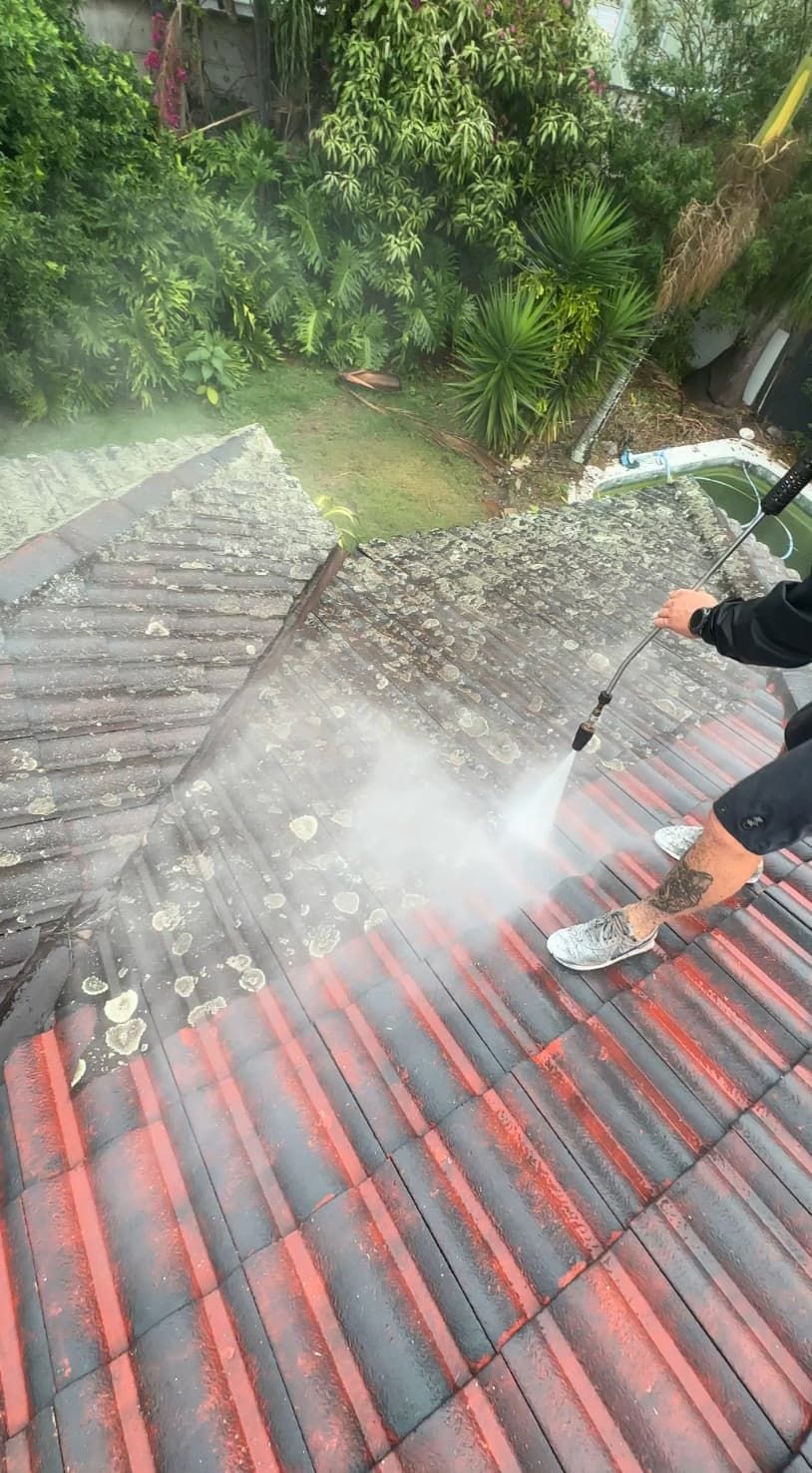
This typically includes high-pressure cleaning to remove dirt, grime, mould and moss, degreasing oil or fuel stains, and removing old sealers or coatings if present.
Any contaminants left on the surface can prevent proper adhesion and cause the new surface to fail.
Step 3: Repair cracks and surface damage
Minor cracks and damaged areas are repaired before resurfacing begins.
This may include filling cracks, patching chipped or spalled concrete, and levelling uneven areas to ensure a smooth, consistent finish.
Step 4: Apply a bonding agent or primer
A bonding agent or primer is applied to help the resurfacing material adhere to the existing concrete.
This step is essential for durability, particularly for driveways exposed to heavy traffic or harsh weather conditions.
Step 5: Apply the resurfacing compound
The resurfacing compound is applied evenly over the driveway using trowels, squeegees or spray equipment, depending on the chosen finish.
The coating is typically only a few millimetres thick but is sufficient to create a fresh, durable surface.
Step 6: Add texture, colour or decorative finish (optional)
If a decorative finish is chosen, this is added during application.
Options include coloured finishes, exposed aggregate effects, stencilled patterns and non-slip textures. These finishes can significantly improve street appeal and complement the home’s exterior.
Step 7: Seal the driveway
Once the resurfaced concrete has cured, a protective sealer is applied.
Sealing helps protect the surface from stains, moisture and UV damage, enhances colour and appearance, and extends the lifespan of the resurfaced driveway.
How Long Does Driveway Resurfacing Take?
In most cases, driveway resurfacing takes one to two days to complete, depending on size and finish.
Light foot traffic is usually possible within 24 to 48 hours. Vehicle access is generally restricted for three to seven days to allow proper curing.
Weather conditions can affect drying and curing times.
How Much Does It Cost to Resurface a Concrete Driveway?
The cost to resurface a concrete driveway varies depending on size, condition, finish and preparation requirements.
Average driveway resurfacing costs in Australia
As a general guide:
- Basic concrete resurfacing typically costs $30 to $60 per square metre
- Decorative or exposed aggregate resurfacing typically costs $60 to $100+ per square metre
Typical driveway resurfacing cost examples
As a general guide, homeowners can expect the following price ranges:
- Small driveway (approximately 30–40 square metres):
Around $1,200 to $3,000, depending on surface condition and finish.
- Medium driveway (approximately 50–70 square metres):
Around $2,500 to $5,500, influenced by preparation requirements and decorative options.
- Large driveway (80 square metres or larger):
Around $4,000 to $8,000 or more, particularly for exposed aggregate or decorative resurfacing systems.
These figures are indicative only. An on-site inspection is required for accurate pricing.
What Factors Affect the Cost of Driveway Resurfacing?
Several factors influence the final cost of resurfacing a driveway.
Driveway size
Larger driveways require more materials, labour and time, increasing the overall cost.
Condition of the existing concrete
Driveways with cracks, surface damage or previous coatings require more preparation and repair, which increases labour and material costs.
Type of finish
Plain resurfacing is the most affordable option. Decorative finishes such as exposed aggregate, colour or stencilled patterns add to the cost due to additional materials and labour.
Surface preparation requirements
Grinding, crack repairs, coating removal and extensive cleaning all add to the overall price. Proper preparation is essential for a long-lasting result.
Access and site conditions
Steep driveways, limited access or tight working areas can increase labour time and cost.
Sealer type and number of coats
Higher-quality sealers and multiple coats improve durability and appearance but increase upfront costs.
Driveway Resurfacing vs Replacement
Resurfacing is often chosen as a more affordable alternative to full driveway replacement.
Resurfacing benefits
- Lower cost than replacement
- Faster completion
- Less disruption
- Improved appearance and surface durability
Replacement considerations
- Required if the slab has structural failure
- Higher cost
- Longer construction time
If the existing concrete slab is structurally sound, resurfacing is usually the more practical option.
How Long Does a Resurfaced Driveway Last?
With correct preparation, quality materials and proper sealing, a resurfaced concrete driveway can last 10 to 15 years or longer.
Longevity depends on traffic load, weather exposure, maintenance and resealing frequency.
DIY vs Professional Driveway Resurfacing
While DIY resurfacing kits are available, professional resurfacing generally produces more reliable and longer-lasting results.
Professional resurfacing ensures proper preparation, correct application techniques and access to commercial-grade materials. DIY resurfacing can result in poor adhesion, uneven finishes and premature failure.
Is Resurfacing a Concrete Driveway Worth It?
For many homeowners, resurfacing is a cost-effective way to restore a worn driveway without the expense of replacement. It improves appearance, increases durability and extends the life of the existing concrete.
Final Thoughts
Concrete driveway resurfacing is an effective solution for driveways that are structurally sound but visually worn. While costs vary based on size, condition and finish, resurfacing is often significantly more affordable than replacement.
Professional assessment and preparation are key to achieving a durable, long-lasting result that enhances the appearance of your property.

Written by Reece Worboys
Reece has been in the Gold Coast roofing game for over 15 years and is a trade-qualified roof plumber and painter/decorator. He's also a QBCC licensed supervisor and roofing contractor.