Pergola Building Regulations QLD
A pergola or patio can be one of the best upgrades you can add to a Queensland home — instant shade, a nicer outdoor living area, and a cleaner “finished” look to the backyard. But before you start pricing timber or organising a tradie, it’s worth understanding the building rules in QLD, because pergolas sit right in that zone where some builds are straightforward and others can become a compliance headache.
If you’re on the Gold Coast, there are a few extra local considerations too: coastal wind, storm season, salt air, and the reality that many homes are built close to boundaries or have existing patio structures that need careful integration.
This guide breaks down how pergola regulations generally work in Queensland, what commonly triggers approvals, what to check before you build, and how to avoid issues that can cost you time and money later.
What Counts As A Pergola In Queensland?
People call a lot of different structures a “pergola”. In practice, what matters is how it’s built and what it does.
\
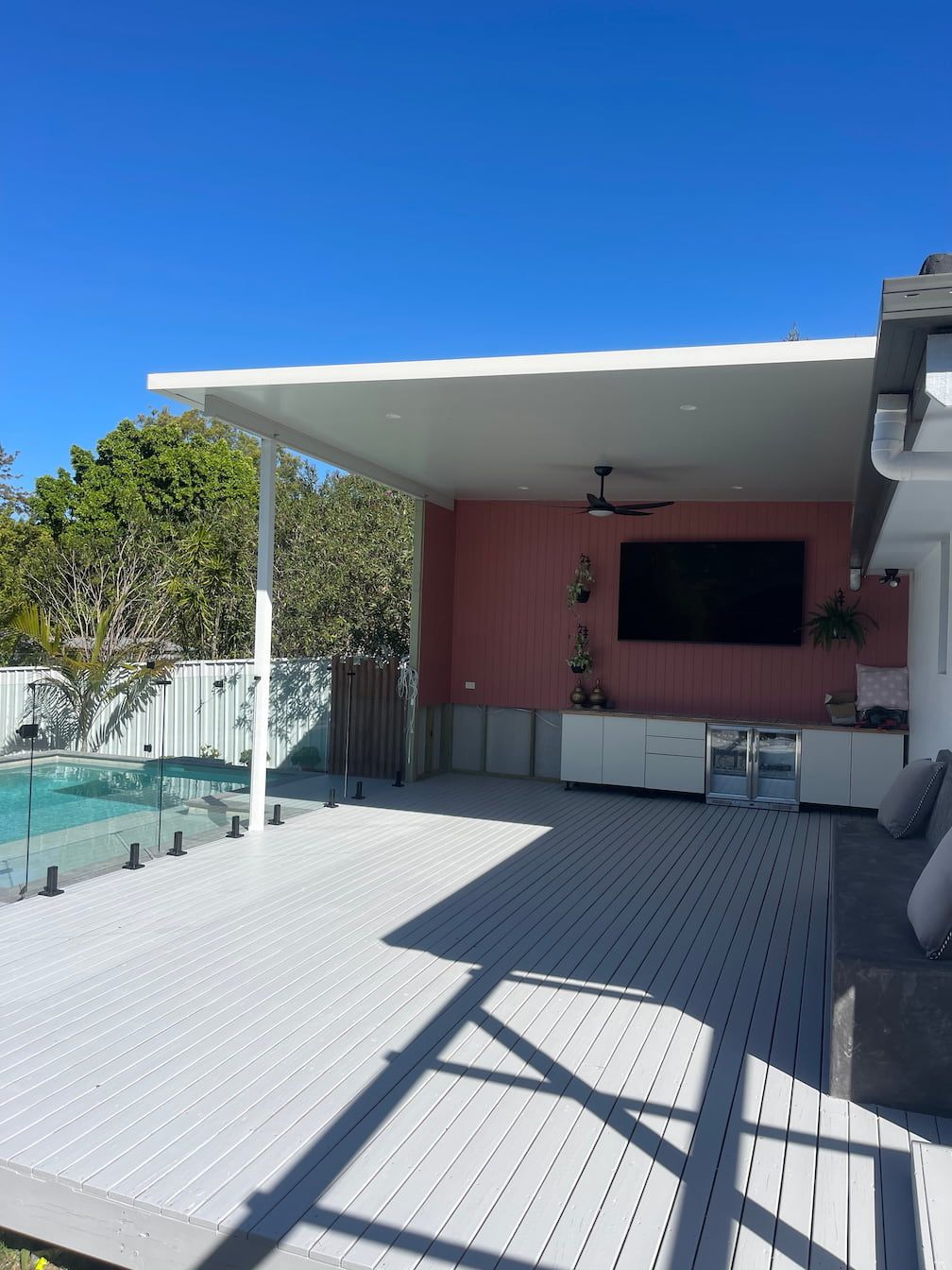
A pergola is typically an outdoor structure made of posts and beams, often with open slats or shade battens above. The moment you turn it into a roofed structure (for example, installing solid roofing sheets, insulated panels, or a fixed waterproof roof), it may be treated more like a patio or carport in approvals and compliance.
On the Gold Coast, plenty of “pergolas” are built as hybrid spaces — partly open, partly roofed, sometimes attached to the house, sometimes freestanding. That’s where you need to be careful, because the type of roof, the method of fixing, and the location on the block can change whether a permit is required.
Do You Need Approval To Build A Pergola In QLD?
In Queensland, whether you need approval usually comes down to a few key factors:
1) Is It Classed As A Building Structure?
A pergola that is fixed, permanent, and built as a structure (posts concreted in, attached to the dwelling, or requiring engineered footing) is more likely to be considered building work.
If it’s a lightweight, temporary, demountable shade structure, the rules are often different — but most homeowners aren’t talking about a temporary structure when they say “pergola”.
2) Is It Roofed Or Waterproof?
An open pergola may be treated differently to a roofed patio.
If you’re adding roofing sheets, polycarbonate, Colorbond, insulated panels, or anything that creates a waterproof roof, you’re likely moving into “roofed structure” territory. That commonly increases the chance you’ll need approvals, because it can affect stormwater, building height, setbacks, and structural loading.
3) Where Is It Located On The Block?
Location is one of the biggest approval triggers.
Setbacks from boundaries, easements, and building lines often apply. A pergola built too close to a side fence or at the wrong height may be considered non-compliant even if the structure itself is well-built.
4) Is It Attached To The House?
Attached structures can create additional compliance requirements because they affect the existing building envelope, tie-ins, waterproofing, and potentially the home’s structural elements.
A freestanding pergola may be simpler in some cases, but not always — especially if you’re close to a boundary or the pergola is substantial in size.
5) Is It In A Special Area?
This matters on the Gold Coast.
Some properties have overlays or special controls such as coastal hazard areas, flood zones, bushfire management overlays, or protected vegetation. If your property falls under additional planning controls, you may need extra approvals even for work that’s usually simple.
Building Approval Vs Planning Approval In QLD
A common point of confusion is the difference between building approval and planning approval.
- Building approval relates to the structure itself — safety, structural adequacy, footings, wind ratings, and compliance with building standards.
- Planning approval relates to where it’s allowed — setbacks, site coverage, height limits, overlays, neighbourhood character, and similar controls.
Some pergolas only need building approval. Some may need planning approval (or sit within planning rules that determine whether it’s accepted). In many cases, you might not need a full planning application, but you still need to meet planning requirements for setbacks and site coverage.
If you’re unsure, it’s always better to check early than to build and find out later you need to lodge paperwork after the fact.
Gold Coast-Specific Considerations For Pergolas
The Gold Coast isn’t like building inland. Even if you’re not right on the water, coastal conditions can affect how a pergola should be designed and constructed.
Wind Ratings & Cyclonic Conditions
Parts of SEQ are subject to higher wind classifications, and your pergola must be designed for local wind loads. A pergola is essentially a “sail” in strong wind if it’s roofed or partially enclosed, so fixings, bracing, and engineering matter.
This is one of the reasons approvals can be required: not to create red tape, but to ensure the structure won’t fail during a storm event.
Corrosion Resistance
Salt air accelerates rust and corrosion. Fixings, brackets, and fasteners should be suitable for coastal environments, and materials should be selected with durability in mind. A pergola can look great when it’s new, but the wrong fixings can lead to stains, streaking, and premature deterioration.
Stormwater & Drainage
If you convert an open pergola to a roofed structure, you create new water runoff. That can require gutters, downpipes, and compliant stormwater discharge — particularly on smaller blocks where water needs to be directed appropriately.
Common Rules That Trigger A Permit
While exact requirements can vary depending on your block and the pergola design, here are the most common “permit triggers” in QLD and Gold Coast builds:
Size And Height
Larger pergolas and higher structures are more likely to require approvals. Height can affect overlooking, boundary setbacks, and neighbourhood planning compliance.
Boundary Setbacks
Building near the fence line is a frequent issue. Many homeowners want the pergola to run along a boundary to maximise usable space, but that’s also where setbacks matter most.
Attached Roofed Structures
The more “built-in” the pergola is — attached to the home, roofed, enclosed on sides — the more it behaves like an extension, which increases compliance requirements.
Plumbing Or Electrical Work
If you’re running electrical for downlights, fans, or outdoor power points, you’ll need a licensed electrician and compliant installation. If you’re altering drainage or stormwater, that may also require compliant plumbing work.
What About DIY Pergolas In Queensland?
DIY isn’t automatically illegal — but you still have to comply with building rules.
If approvals or certifications are required for your build and you skip them, you may run into issues such as:
- Problems selling the home (unapproved structures often come up in conveyancing)
- Insurance concerns if a non-compliant structure is damaged in a storm
- Council enforcement, notices, or requirements to modify or remove the structure
- Safety risks from inadequate footings, bracing, or fixings
If you’re building it yourself, the smart approach is to confirm whether approvals are required and ensure the design is suitable for local conditions.
Steps To Take Before You Build A Pergola On The Gold Coast
If you want to keep things smooth, run through this checklist early.
1) Confirm Your Property Constraints
Check whether your property has overlays, easements, or boundary controls that may affect where you can build. Smaller lots and newer estates often have tighter rules.
2) Decide If It Will Be Open Or Roofed
This is a big one. A “true” open pergola may have fewer requirements than a roofed patio-style structure. If you plan to roof it later, think ahead — many people build an “open pergola” and then add a solid roof, which can create compliance issues if the original structure wasn’t designed for it.
3) Get The Design Right For Wind And Weather
On the Gold Coast, appropriate bracing, fixings, and engineering are not optional if you want it to last. Even if you’re not in a high wind classification zone, storms can still cause major damage to poorly designed outdoor structures.
4) Confirm Setbacks And Height
This helps you avoid the most common “you need to change it” scenarios. A small shift in location or a slightly lower roofline can be the difference between a smooth build and a compliance headache.
5) Use Licensed Trades Where Required
If you’re adding lighting, fans, outlets, or any electrical work, use a licensed electrician. If you’re managing stormwater from a roofed structure, make sure it’s done properly and legally.
Can You Build A Pergola Without Approval If It’s Small?
Many homeowners assume a pergola is “minor work” and therefore exempt. Sometimes that’s true, but it’s not a safe assumption.
A small pergola can still trigger approvals if it:
- Is close to a boundary
- Is roofed or waterproof
- Is attached to the house
- Sits within an overlay area
- Requires structural footings or engineered elements
The reality is: the approval question isn’t only about size — it’s about what the structure does, where it sits, and how it’s built.
What Happens If Your Pergola Isn’t Compliant?
Non-compliant pergolas can create problems well beyond council paperwork.
You may experience:
- Structural movement or failure in high winds
- Water issues and runoff damage if roof drainage isn’t handled properly
- Rust stains, rot, or premature deterioration in coastal conditions
- Complications when selling or refinancing
- Requests to rectify, certify after the fact, or remove the structure
If you’re investing in your outdoor area, it’s worth building it properly the first time — not patching problems later.
How Refresh Roof & Exterior Restorations Can Help
Get in touch with Refresh Roof & Exterior Restorations today and let’s talk through the smartest way to upgrade your outdoor space — with a finish that looks great and stands up to Queensland conditions. Get in touch to discuss a new patio or pergola on the Gold Coast.

Written by Reece Worboys
Reece has been in the Gold Coast roofing game for over 15 years and is a trade-qualified roof plumber and painter/decorator. He's also a QBCC licensed supervisor and roofing contractor.