How To Clean Roof Tiles
Roof tiles are designed to protect your home from the elements, but over time they cop a lot of punishment. On the Gold Coast and across QLD, roof tiles are constantly exposed to sun, rain, humidity, salt air, pollution, and organic growth. Without regular cleaning, tiles can become covered in moss, lichen, algae, and dirt, which not only looks bad but can also shorten the life of your roof.
This guide explains how roof tiles get dirty, why cleaning matters, the safest and most effective ways to pressure clean them, and when it’s best to call in professionals instead of attempting a DIY clean.
Why Roof Tiles Get Dirty
Roof tiles are porous, especially concrete and terracotta tiles. This means they absorb moisture, creating the perfect environment for organic growth.
Common causes of dirty roof tiles include:
- Moss and lichen growth caused by moisture retention
- Algae and mould thriving in humid conditions
- Dirt and dust buildup from wind and traffic pollution
- Salt residue in coastal areas
- Leaf debris sitting in roof valleys and behind ridges
Shaded areas of the roof usually get dirty faster, particularly south-facing sections or areas under trees.
Why Cleaning Roof Tiles Is Important
Roof cleaning is not just about appearance. Dirty tiles can lead to long-term damage if ignored.
Key benefits of cleaning roof tiles include:
- Preventing moss and lichen from lifting or cracking tiles
- Reducing moisture retention that accelerates tile deterioration
- Improving water runoff and preventing blocked valleys
- Extending the lifespan of your roof
- Improving the overall appearance and value of your home
- Making it easier to spot cracked or damaged tiles early
Regular roof cleaning is often far cheaper than repairing or replacing damaged roofing down the track.
Types Of Roof Tiles And Cleaning Considerations
Before cleaning, it’s important to understand what type of roof tiles you have, as each requires a slightly different approach.
Concrete Roof Tiles
Concrete tiles are common across Australia. They are durable but porous, which means they readily absorb moisture and grow moss and lichen.
Cleaning considerations:
- Avoid excessive pressure that can strip the surface
- Gentle washing and treatments work best
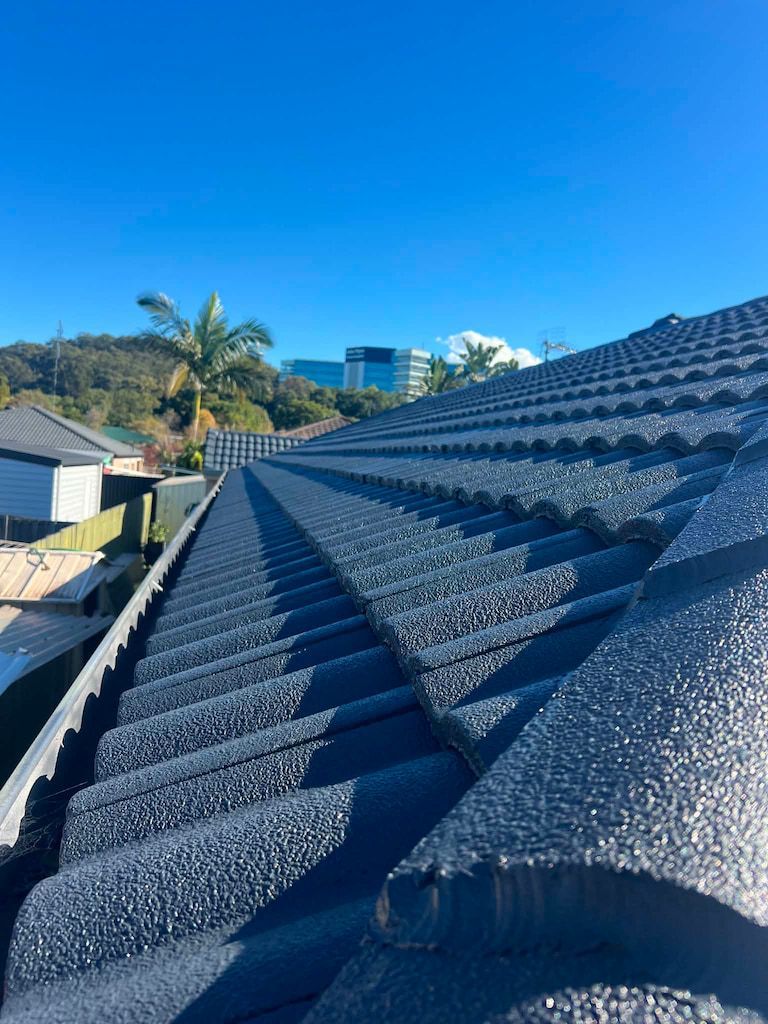
- Sealing or painting may be considered after cleaning
Terracotta Roof Tiles
Terracotta tiles are more brittle than concrete tiles and can crack easily if handled incorrectly.
Cleaning considerations:
- Low-pressure cleaning is essential
- Walking on the roof should be minimised
- Harsh chemicals should be avoided
Slate Roof Tiles
Slate tiles are natural stone and can last decades, but they are fragile.
Cleaning considerations:
- Very gentle cleaning methods only
- No high-pressure washing
- Professional cleaning strongly recommended
Safety Considerations Before Cleaning Roof Tiles
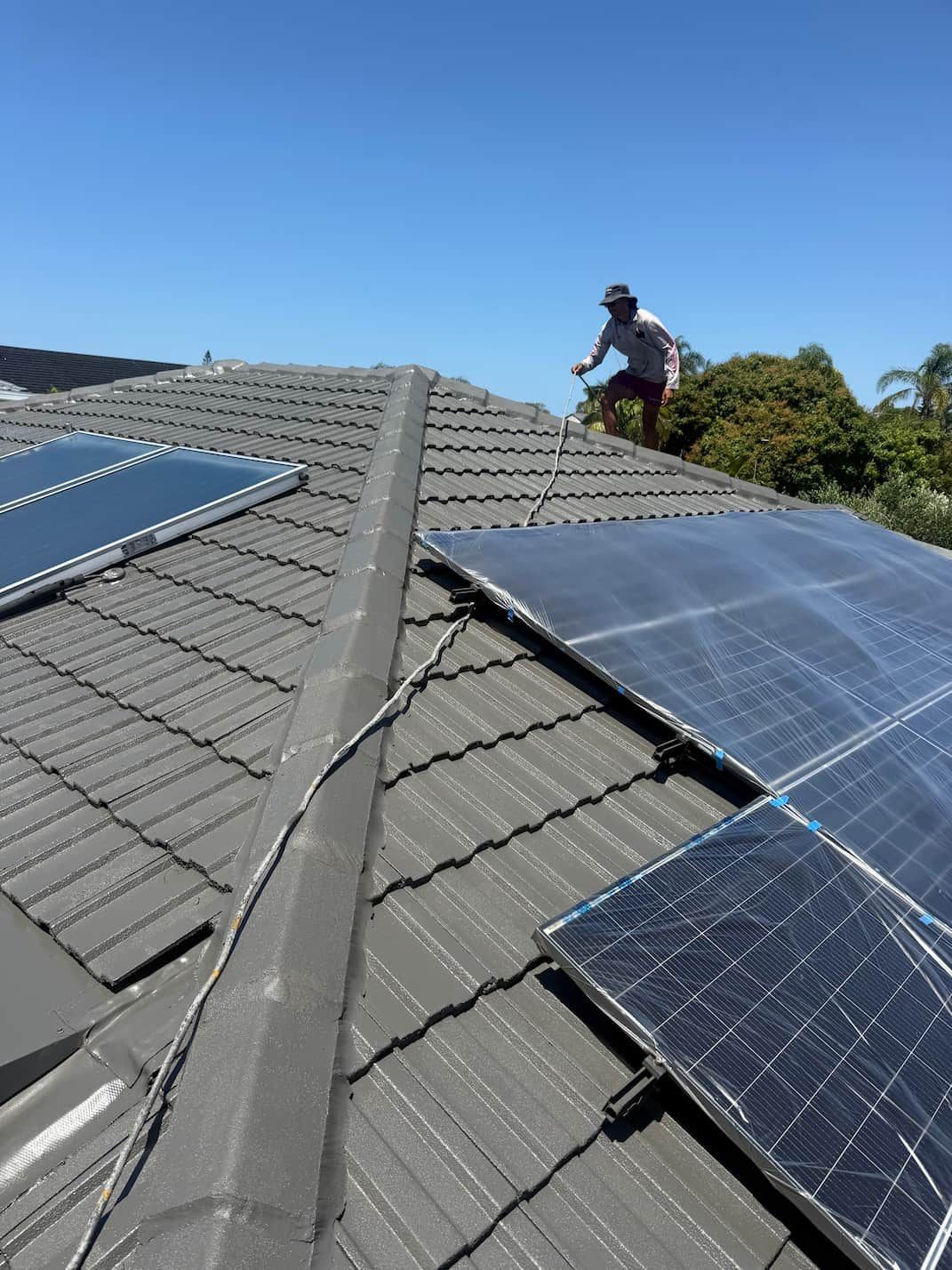
Roof cleaning can be dangerous. Slippery tiles, roof pitch, and height all increase the risk of falls.
Before attempting any roof cleaning, consider:
- Whether your roof is safe to walk on
- The pitch and height of the roof
- Wet tiles becoming extremely slippery
- The risk of breaking tiles underfoot
- Access to safety equipment such as harnesses
Falls from roofs are a common cause of serious injury. If you’re unsure, professional roof cleaning is the safest option.
Methods For Cleaning Roof Tiles
There are several ways to clean roof tiles, but not all methods are suitable for every roof.
Manual Cleaning
Manual cleaning involves physically removing moss, lichen, and debris by hand using tools such as brushes or scrapers.
This method may involve:
- Removing debris from valleys and gutters
- Scraping thick moss growth from tiles
- Sweeping loose dirt and leaves
Pros:
- Minimal water usage
- No risk of water ingress
Cons:
- Labour-intensive
- Requires roof access
- Risk of tile damage if done incorrectly
Manual cleaning is usually only practical for small areas or light growth.
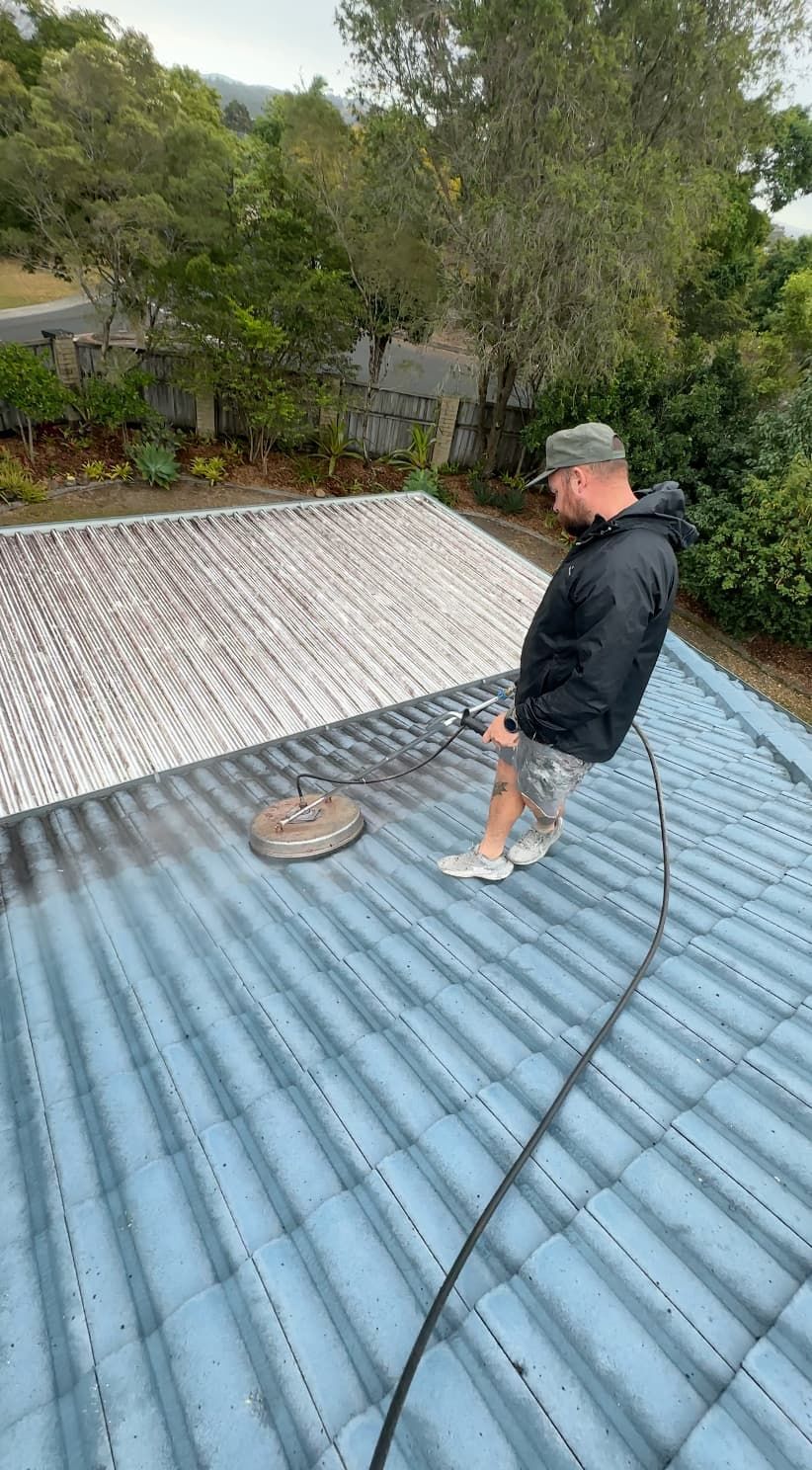
Pressure Cleaning Roof Tiles
Pressure cleaning is one of the most commonly discussed methods, but it must be done correctly.
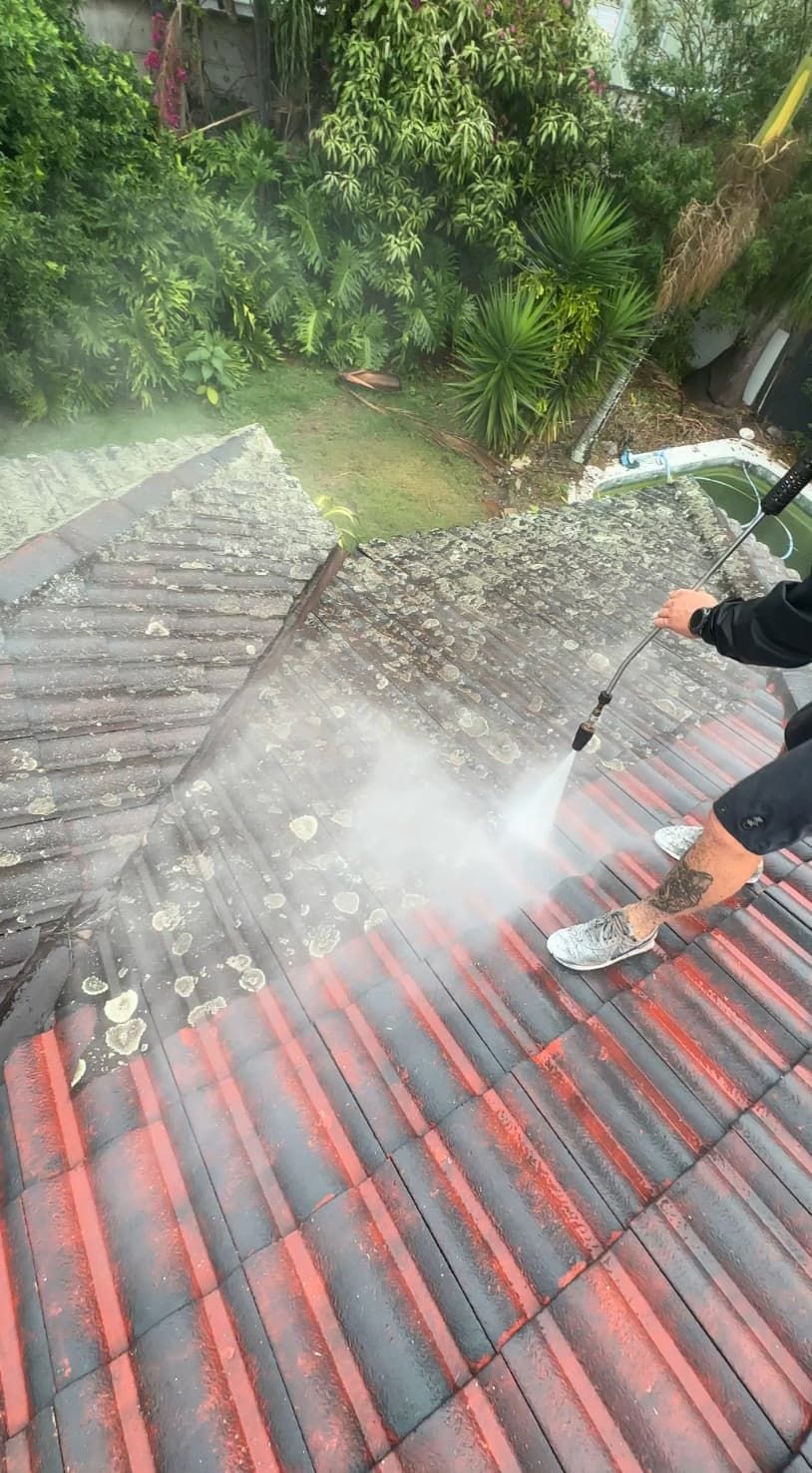
When done properly, pressure cleaning can:
- Remove built-up dirt and grime
- Strip moss and lichen from tile surfaces
- Instantly improve roof appearance
However, incorrect pressure cleaning can cause serious damage.
Risks of pressure cleaning roof tiles:
- Removing protective coatings from tiles
- Forcing water under tiles into the roof cavity
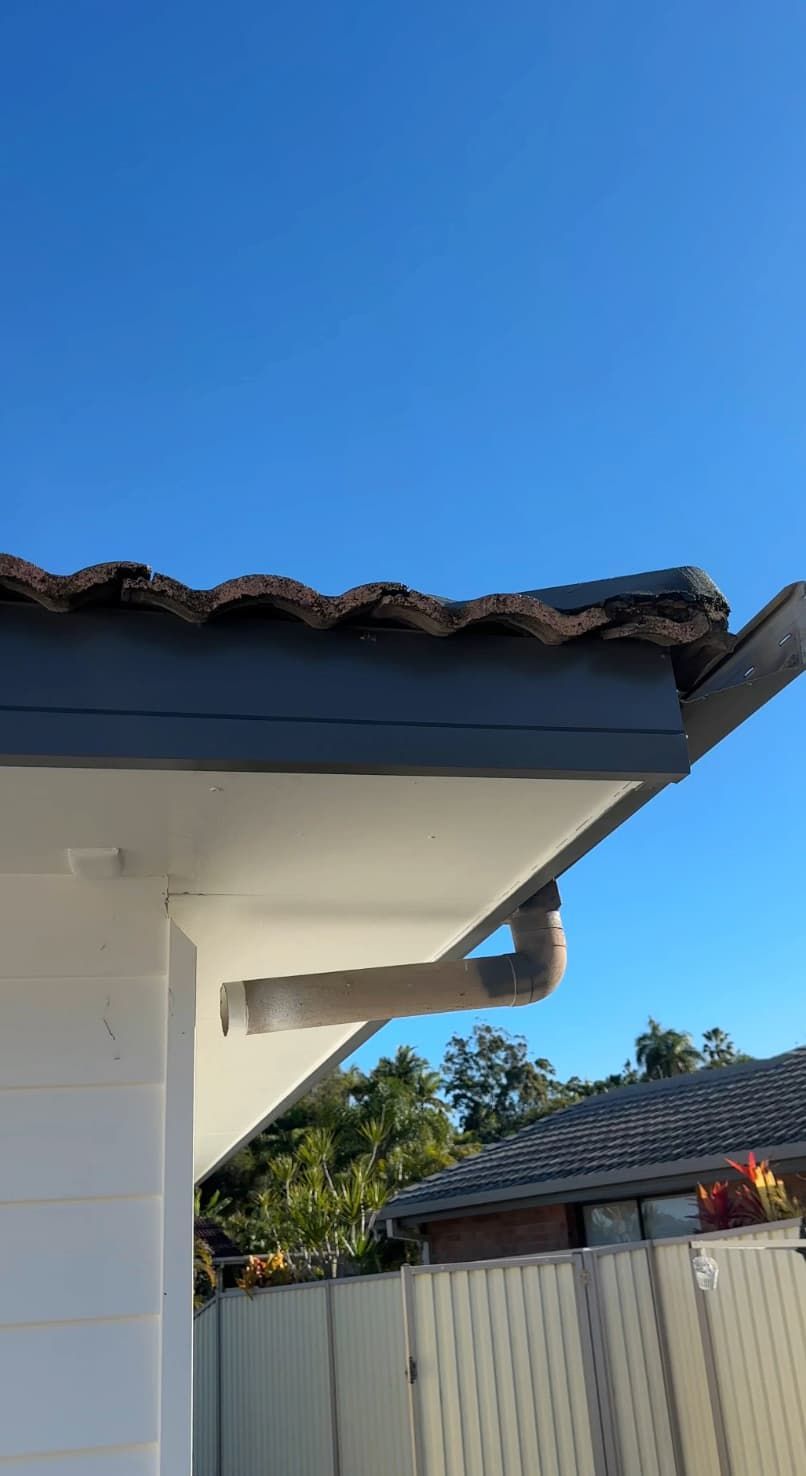
- Cracking or dislodging tiles
- Reducing tile lifespan
For this reason, high-pressure cleaning should only be carried out by experienced professionals who understand correct pressures, angles, and techniques.
Soft Washing Roof Tiles
Soft washing is widely considered the safest and most effective method for cleaning roof tiles.
Soft washing involves:
- Applying specialised cleaning solutions
- Killing moss, algae, and lichen at the root
- Using low pressure to rinse away residue
Benefits of soft washing include:
- No damage to tiles
- Longer-lasting results
- Reduced regrowth of moss and algae
- Suitable for concrete, terracotta, and slate tiles
Soft washing may not deliver instant visual results like pressure cleaning, but it continues to work over time as rain naturally washes away dead growth.
Chemical Treatments For Roof Tile Cleaning
Chemical treatments are often used as part of soft washing or post-cleaning maintenance.
These treatments:
- Kill organic growth spores
- Help prevent regrowth
- Are usually diluted and applied evenly
It’s important that chemicals used are suitable for roofing materials and surrounding landscaping. Incorrect chemical use can damage tiles, plants, and gutters.
How Often Should Roof Tiles Be Cleaned?
There is no one-size-fits-all answer, but several factors influence cleaning frequency.
These include:
- Local climate
- Roof orientation and shade
- Proximity to trees
- Tile material
- Coastal or inland location
As a general guide:
- Coastal and humid areas may need cleaning every 2–3 years
- Heavily shaded roofs may require more frequent attention
- Drier inland areas may stretch to 4–5 years
Regular inspections help determine when cleaning is needed.
Signs Your Roof Tiles Need Cleaning
If you’re unsure whether it’s time to clean your roof tiles, look for these signs:
- Green or black staining on tiles
- Visible moss clumps or lichen patches
- Water pooling or slow drainage
- Tiles appearing dull or uneven in colour
- Increased debris buildup in gutters
Catching the issue early makes cleaning easier and reduces the risk of damage.
Can You Clean Roof Tiles Yourself?
DIY roof cleaning is possible, but it comes with risks.
DIY may be suitable if:
- The roof is single storey
- Growth is light
- You have safe access and equipment
DIY is not recommended if:
- The roof is steep or high
- Tiles are brittle or aged
- Moss or lichen growth is extensive
- You lack safety equipment
Many homeowners start a DIY clean and stop once they realise how slippery and fragile roof tiles can be.
Professional Roof Tile Cleaning
Professional roof cleaners have the experience, equipment, and safety systems to clean roofs properly.
Benefits of hiring professionals include:
- Correct cleaning method for your tile type
- Reduced risk of damage
- Safe working practices
- Longer-lasting results
- Identification of damaged or cracked tiles
Professionals can also advise whether your roof may benefit from sealing or painting after cleaning.
What To Do After Cleaning Roof Tiles
After cleaning, it’s important to keep your roof maintained.
Post-cleaning tips include:
- Keeping gutters clear
- Trimming overhanging branches
- Monitoring shaded roof areas
- Scheduling periodic inspections
Regular maintenance slows regrowth and extends the time between cleans.
Should You Paint Or Seal Roof Tiles After Cleaning?
In some cases, homeowners choose to paint or seal roof tiles after cleaning.
This may be beneficial if:
- Tiles are heavily weathered
- The surface coating has worn away
- You want to improve appearance and longevity
Painting or sealing should only be done after thorough cleaning and repairs, and only if the tiles are suitable.
Common Mistakes To Avoid When Cleaning Roof Tiles
Some of the most common roof cleaning mistakes include:
- Using excessive pressure
- Walking incorrectly on tiles
- Using harsh chemicals
- Ignoring safety precautions
- Attempting to clean during wet or windy weather
Avoiding these mistakes can prevent costly repairs.
Final Thoughts On Cleaning Roof Tiles
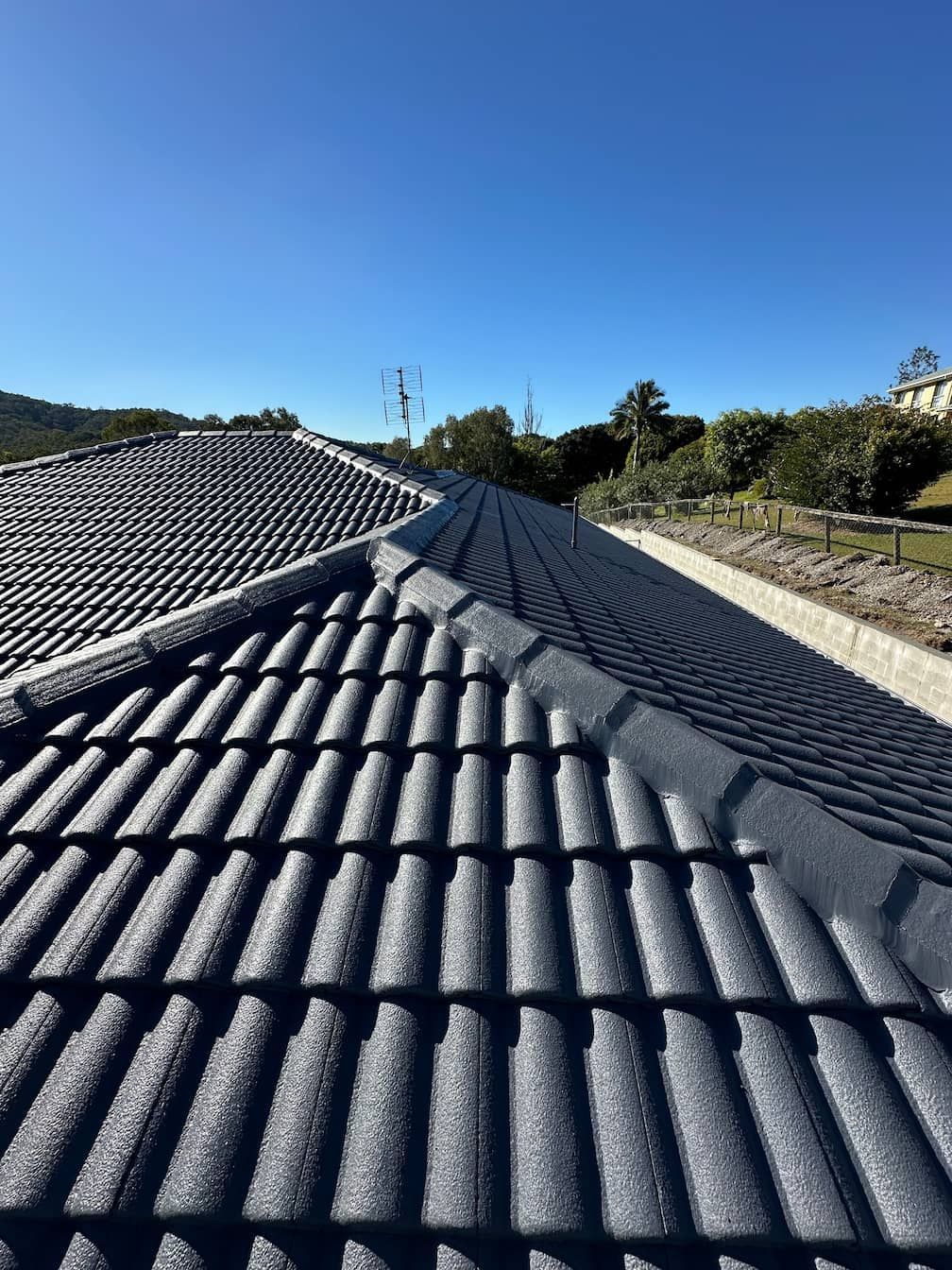
Roof tile cleaning is an essential part of maintaining your home. Whether you choose a gentle soft wash or engage professionals for a full clean, the key is using the right method for your tile type and local conditions.
A clean roof not only looks better but performs better, lasts longer, and protects your home more effectively. By understanding how roof tiles get dirty and how to clean them safely, you can make informed decisions that save money and prevent long-term damage.
If your roof tiles are showing signs of heavy growth, staining, or deterioration, professional roof cleaning is often the safest and most effective solution.

Written by Reece Worboys
Reece has been in the Gold Coast roofing game for over 15 years and is a trade-qualified roof plumber and painter/decorator. He's also a QBCC licensed supervisor and roofing contractor.