How Often Should I Clean My Roof?
Most Gold Coast roofs should be professionally cleaned every two to three years. However, there is no fixed schedule that suits every property. A roof surrounded by trees or regularly exposed to shade and moisture may need cleaning more frequently, while a roof in an open, sunny position may remain clean for longer.
The roofing material, property location, roof pitch and type of organic growth will all influence how quickly the surface becomes dirty.
At Refresh Roof & Exterior Restorations, we have cleaned and restored roofs in a wide range of conditions across the Gold Coast. From experience, we know that the amount of time since the last clean is only one part of the decision. The appearance and condition of the roof are far more useful indicators.
How Often Should a Roof Be Professionally Cleaned?
As a general guide, having your roof inspected and professionally cleaned every two to three years can help keep it looking presentable and prevent a heavy accumulation of dirt, mould, algae, moss and lichen.
Some properties may require cleaning every one to two years, particularly when they are surrounded by trees, located in a damp area or have sections of roof that receive very little direct sunlight.
Other roofs may only need cleaning every three to five years. This can be the case when the property is positioned in an open area with plenty of sunlight, good airflow and few overhanging trees.
Rather than automatically cleaning a roof according to a strict timetable, we recommend monitoring its condition. If the roof remains clean and there are no signs of organic growth, there may be no benefit in cleaning it unnecessarily.
Why Do Gold Coast Roofs Become Dirty So Quickly?
The Gold Coast’s subtropical climate is one of the reasons local roofs can develop visible growth relatively quickly. Warm temperatures, humidity and seasonal rain create favourable conditions for mould, algae, moss and lichen.
A roof is also exposed to airborne dirt, dust, leaves, seed pods, bird droppings and pollution throughout the year. When this material collects in valleys, around flashings or between tiles, it can retain moisture and encourage further growth.
We regularly find that one side of a roof is much dirtier than the other. The shaded side may remain damp for longer after rain, while the section receiving direct sunlight dries quickly and stays comparatively clean.
This is why two neighbouring properties—or even two sections of the same roof—can require very different cleaning schedules.
Signs It Is Time to Clean Your Roof
You do not have to wait until the entire roof appears black or green before arranging professional cleaning. Early signs of contamination are usually easier to manage than years of heavy growth.
Common signs that your roof may need cleaning include:
- Dark streaks or discoloured patches
- Green growth on tiles or metal sheets
- Moss developing between tiles
- Lichen attached to the roof’s surface
- Dirt accumulating around flashings and penetrations
- Leaves and debris collecting in roof valleys
- A roof that appears significantly darker than its original colour
- Organic growth spreading into gutters
- The home looking tired or neglected from the street
If you are unsure whether the roof needs cleaning, a professional inspection can determine what is causing the discolouration and which cleaning method is most appropriate.
What Grows on Gold Coast Roofs?
Not everything visible on a dirty roof is the same. Different types of growth attach to roofing surfaces in different ways, and this influences how the roof should be cleaned.
Mould
Mould commonly appears in damp and shaded areas. It can produce dark staining and may spread across tiles, roof sheets and other external surfaces.
Algae
Algae can create green, brown or black streaks across the roof. It tends to thrive where moisture remains on the surface and can gradually spread over a large area.
Moss
Moss has a thicker, softer appearance and can grow between tiles, along ridge capping and in shaded sections. It retains moisture and may also contribute to debris collecting in small gaps.
Lichen
Lichen attaches firmly to roofing materials and can be more stubborn than surface dirt or algae. Aggressive attempts to remove it can damage coatings or the surface of older tiles, so the roof’s condition must be considered before cleaning.
We select our cleaning approach based on what is growing on the roof rather than treating every stain in exactly the same way.
Which Roofs Need More Frequent Cleaning?
Certain properties naturally become dirty faster than others. In our experience, the following conditions often mean a roof will require more frequent attention.
Homes Surrounded by Trees
Trees provide shade and drop leaves, branches, flowers and seed pods onto the roof. They can also reduce airflow, causing the surface to remain damp for longer.
Overhanging branches may deposit debris directly into gutters and roof valleys. Bird activity can also be higher around established trees, leading to more droppings on the roof.
Regularly trimming branches away from the home can reduce debris, but the work should be completed safely and without damaging the roof.
Shaded or South-Facing Roof Sections
Roof sections that receive limited sunlight tend to dry more slowly. These areas frequently show mould, algae or moss before the sunnier sections of the same roof.
It may not be necessary to clean the entire roof every time a small patch appears. However, uneven growth is worth monitoring because it can spread and become increasingly noticeable.
Properties Near Bushland or Waterways
Homes near bushland, canals, creeks or other damp environments may experience more organic growth and airborne debris. The exact effect depends on the property’s exposure, surrounding vegetation and airflow.
Low-Pitched or Complex Roofs
Roofs with a low pitch may drain and dry more slowly than steep roofs. Complex designs can also create valleys, corners and sheltered sections where debris accumulates.
These areas may require additional attention during cleaning because dirt and organic growth can remain hidden from ground level.
Coastal Properties
Coastal roofs are exposed to salt, moisture and windborne contaminants. Salt deposits may not create the same appearance as moss or mould, but they can contribute to the deterioration of metal components and coatings.
Professional cleaning can remove surface contaminants while providing an opportunity to check for early corrosion, worn fixings and damaged coatings.
Do Tiled and Metal Roofs Need Different Cleaning Schedules?
Both tiled and metal roofs require cleaning, but their condition and surface finish are more important than the material alone.
Concrete roof tiles often have a coated surface that gradually wears with age. As the coating deteriorates, the tiles can become more porous and hold dirt or organic growth more readily. An older tiled roof may therefore become dirty faster than a newer, well-sealed roof.
Metal roofing has a smoother surface, which can make it more difficult for moss to establish. However, dirt, mould, algae, bird droppings and salt residue can still collect, particularly around sheet laps, fixings, flashings and sheltered sections.
The cleaning technique must also suit the roofing material. Excessive pressure or poor equipment handling can damage tiles, strip coatings, force water beneath roofing materials or disturb seals.
We inspect the roof before cleaning and adjust the pressure, equipment and treatment to suit its material and current condition.
Should I Have My Roof Cleaned Every Year?
Most Gold Coast homeowners will not need a complete roof clean every year. Cleaning too frequently can be unnecessary, especially when the roof remains in good condition and has minimal dirt or organic growth.
Annual visual checks are still worthwhile. You may be able to inspect the roof safely from the ground or from an appropriate vantage point. Look for obvious growth, damaged materials, blocked gutters or significant changes in appearance.
Avoid climbing onto the roof yourself. Roofing surfaces can be slippery, particularly when covered in moss, algae or moisture. Walking on tiles incorrectly can also crack them and create new leak risks.
An annual professional inspection may be appropriate for an older roof, a property surrounded by trees or a home that has previously experienced roofing problems. However, inspection does not automatically mean the entire roof needs cleaning each year.
Can Roof Cleaning Prevent Damage?
Roof cleaning is primarily a maintenance and presentation service. It removes contaminants and growth, improves the roof’s appearance and makes its condition easier to assess.
Cleaning does not repair cracked tiles, corrosion, loose ridge caps, failed sealant or damaged flashings. However, removing thick grime and organic growth can expose problems that were previously difficult to see.
During roof cleaning jobs, we sometimes identify small maintenance issues beneath the dirt. Finding these problems early gives the homeowner an opportunity to repair them before they contribute to leaks or more expensive damage.
Moss, leaves and other debris can also retain moisture and obstruct gutters or roof valleys. Removing the accumulation allows water to move more freely through the drainage system.
A clean roof is not guaranteed to be a sound roof, but cleaning forms a useful part of responsible roof maintenance.
Should I Clean My Roof Before Painting It?
Yes. Thorough cleaning is an essential step before roof painting or restoration.
Roof coatings need a properly prepared surface to adhere correctly. Applying primer and paint over dirt, mould, lichen, chalky coatings or loose material can result in poor adhesion and an uneven finish.
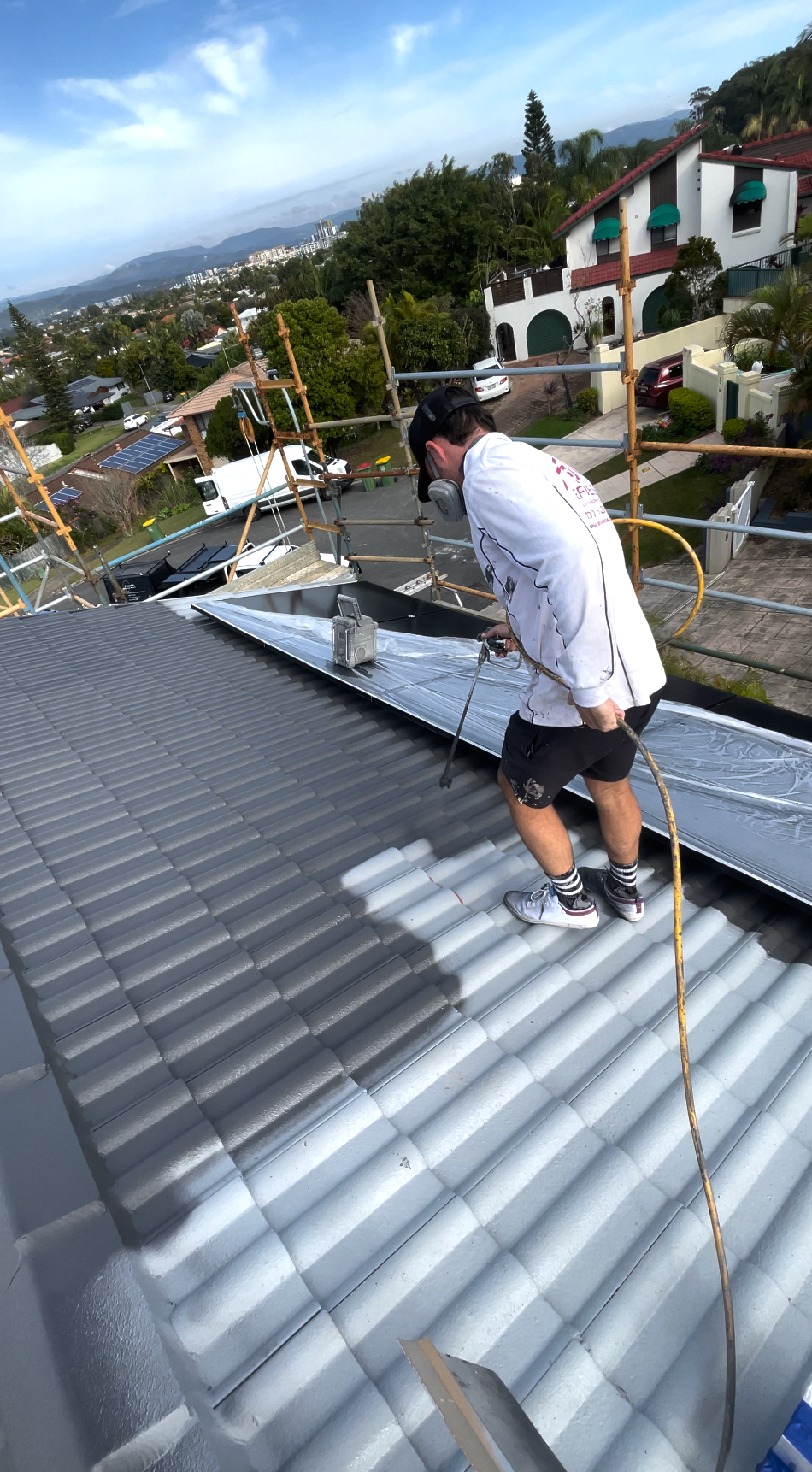
Our roof restoration process begins with assessing and preparing the property before pressure cleaning the roof. Required repairs are then completed, followed by priming, sealing and the application of protective roof coatings.
Simply spraying paint over a dirty roof might make it look improved temporarily, but it does not create the strong foundation required for a professional and durable result.
If your roof coating is severely faded, worn or flaking, cleaning alone may not achieve the appearance you want. A full roof restoration may provide better value by combining cleaning, repairs and recoating.
Is Pressure Cleaning Suitable for Every Roof?
No. High-pressure cleaning is effective on many roofing surfaces, but it is not the right method for every roof or every type of contamination.
Depending on the material, age and condition of the roof, soft washing may be more appropriate. Soft washing uses lower pressure and specialised cleaning solutions to break down mould, algae and other organic growth.
The safest method can only be selected after inspecting the roof. An older tile, a sound coated metal sheet and a badly weathered surface should not automatically receive identical treatment.
Incorrect pressure cleaning can strip coatings, damage fragile materials or drive water beneath tiles and flashings. This is why roof cleaning requires more care than cleaning a driveway or retaining wall.
Can I Clean My Roof Myself?
We generally recommend leaving roof cleaning to experienced and properly equipped professionals.
Apart from the risk of damaging the roofing material, working at height is dangerous. A wet roof becomes extremely slippery, and hoses can create additional trip hazards. Roof pitch, brittle tiles, skylights and concealed weak areas make the work even more hazardous.
There is also a risk of pushing water beneath roofing materials when a pressure cleaner is directed at the wrong angle. This can create water entry even when the roof was not previously leaking.
Professional roof cleaners have the safety equipment, access systems and experience needed to complete the work more safely. They can also manage water, debris and overspray to reduce mess around the home.
When Is Cleaning Not Enough?
Cleaning can dramatically improve a dirty roof, but it cannot reverse severe deterioration.
If tiles are badly worn, ridge capping is loose, roof sheets are extensively corroded or the existing coating is failing, the roof may need repairs, restoration or reroofing.
We occasionally inspect roofs that homeowners believe only need cleaning, only to find that the grime is covering significant wear. We also see the opposite: roofs that look terrible from the ground but are structurally sound and respond exceptionally well to professional cleaning.
This is why we assess the condition beneath the dirt before recommending the service.
Arrange Professional Roof Cleaning on the Gold Coast
For most homes, professional roof cleaning every two to three years is a reasonable starting point. Your property may need more or less frequent cleaning depending on its location, surrounding trees, sunlight, roof design and material.
The best time to clean your roof is before organic growth becomes heavy, widespread and difficult to remove.
Refresh Roof & Exterior Restorations professionally cleans tiled and metal roofs across the Gold Coast and surrounding areas. We use pressure cleaning or specialised soft-washing techniques depending on the roof and its condition.
If your roof is looking dirty, stained or overgrown, call us on 1300 637 188 or request a quote online. We can inspect the roof, recommend the most suitable cleaning method and identify whether any repairs or additional maintenance should be considered.

Written by Reece Worboys
Reece has been in the Gold Coast roofing game for over 15 years and is a trade-qualified roof plumber and painter/decorator. He's also a QBCC licensed supervisor and roofing contractor.